
How Game Art Is Actually Created Today
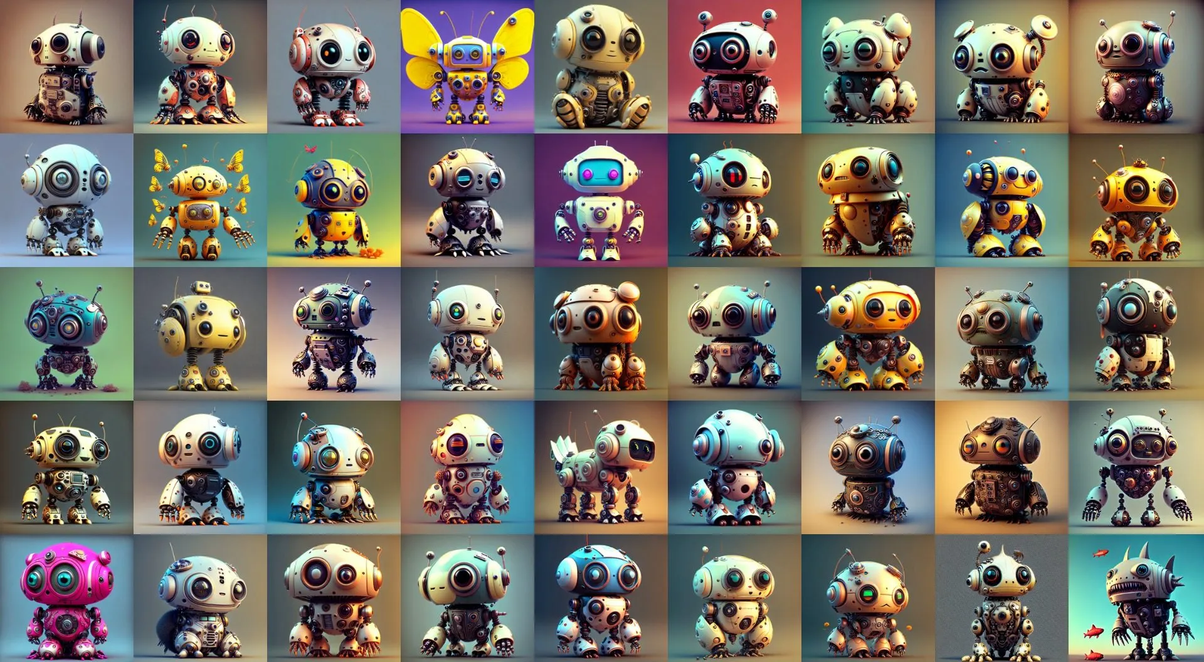
Type a sentence, get a game world. Press a button, replace the artists.
That button does not exist. It is not close.
But the real story of game art in 2026 is stranger and more useful than the button ever was. The pipeline did not get automated. It got rebuilt.
And the studios that understand how it was rebuilt are quietly pulling ahead of the ones still waiting for magic.
The Problem: Everyone Is Watching the Wrong Layer
The industry keeps asking whether AI can generate a finished asset.
Wrong question.
AI can already generate a 3D form in seconds. Tools like Meshy, Luma, and Tripo3D spit out volumes on demand. The problem is what comes next. A raw AI mesh is a chaotic pile of triangles. It breaks the shading. It bloats file size. It tears apart the moment you try to animate it.
To become a real game asset, that mesh needs retopology, UV unwrapping, material authoring, and rigging.
This is where the work actually lives. And this is where AI mostly fails.
The generation step was never the bottleneck. The bottleneck is everything after it. Founders who miss this build tools for the wrong half of the pipeline.
Why the Pipeline Stopped Being a Line
Game art used to be an assembly line.
Concept fed modeling. Modeling fed retopology. Retopology fed texturing, then rigging, then animation, then the engine. A delay anywhere stalled everything downstream.
That line is gone.
Today the pipeline runs in parallel. A technical artist can build a procedural rig while the concept artist is still refining the silhouette and the modeler is pushing digital clay in ZBrush. Nobody waits for a clean handoff.
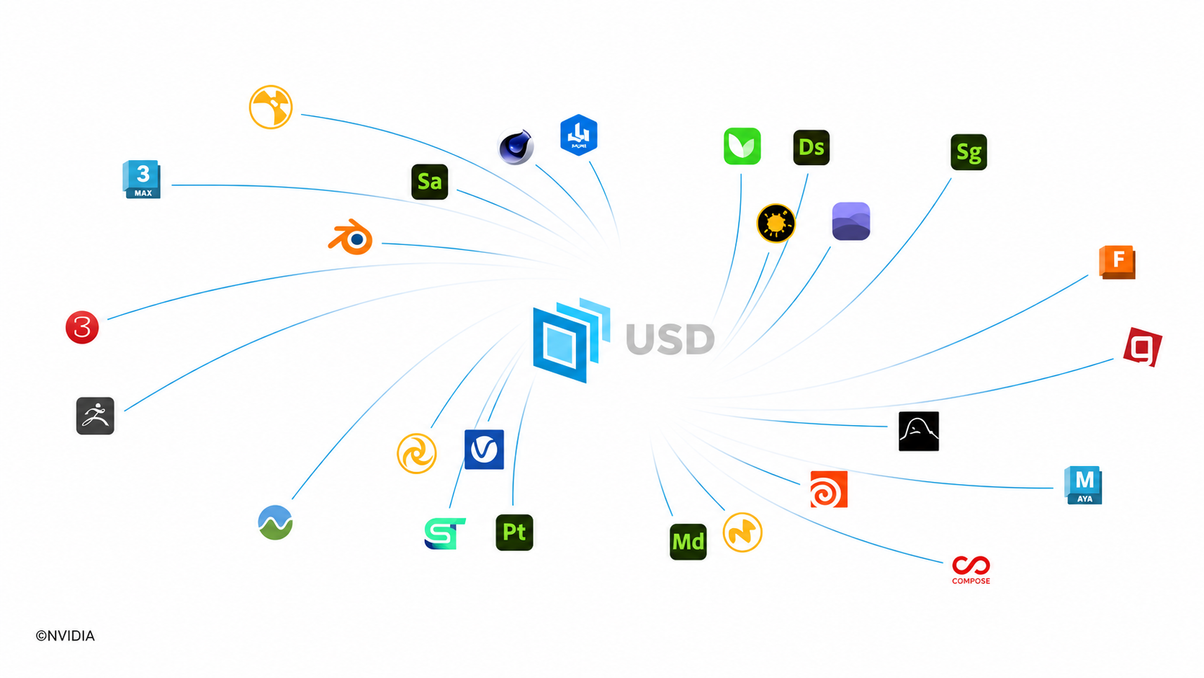
What made this possible is a quiet piece of infrastructure called OpenUSD, a scene format invented at Pixar and open-sourced into the industry's connective tissue. It lets multiple artists work on the same asset at once, each in their own layer, merged in real time. Change the mesh, and the material layer survives untouched.
The efficiency gains are not marginal. Studios migrating to USD have reported load times on heavy scenes dropping from around 18 minutes to under 10 seconds, and storage shrinking from gigabytes to a fraction of that.
That is the real shift. Not that AI joined the pipeline, but that the pipeline became something AI could plug into at all.
AI's Role Across the Game Art Pipeline
The honest picture is that AI is everywhere in this pipeline, and decisive in almost none of it.
Roughly half of AAA studios have deployed AI in production, and close to 97% of developers use AI-assisted tools at some stage. But look at where, and a pattern appears.
AI dominates the front. In concept and mood-boarding, Midjourney and Stable Diffusion generate dozens of stylistic variants in minutes, work that used to take weeks. Artists have shifted from painters to art directors, steering output instead of producing it.
AI assists in the middle. It generates base meshes for sculptors to refine, accelerates retopology by predicting edge flow, and strips baked lighting out of photo-scanned textures to produce clean materials in minutes.
AI mostly fails at the end. UV seams need to be hidden inside a collar or along a clothing stitch, and AI places them in plain sight. Hero character performance, the subtle facial weight of an up-close moment, still needs a human. Markerless AI motion capture hits maybe 85 to 90% of the accuracy of an expensive optical stage, good enough for background crowds, not for your protagonist.
The pattern is the whole insight. AI expands scope, not replaces craft. It lets a team build a denser world, not a smaller team.
Why This Is a Capital Question
Reframe all of this as a balance-sheet decision, and the strategy gets clear.
At AAA scale, art is not a creative problem. It is a logistics problem. Asset volume swings violently across pre-production, vertical slices, and post-launch LiveOps. Carrying enough internal headcount for peak production means payroll drag in the troughs and layoffs when a title ships.
So outsourcing has stopped being a cost-cutting trick. It is now a way to scale production without absorbing permanent risk.
And this is where the map tilts toward India.
What This Means for India
India did not stumble into game art. It built a two-decade pedigree.
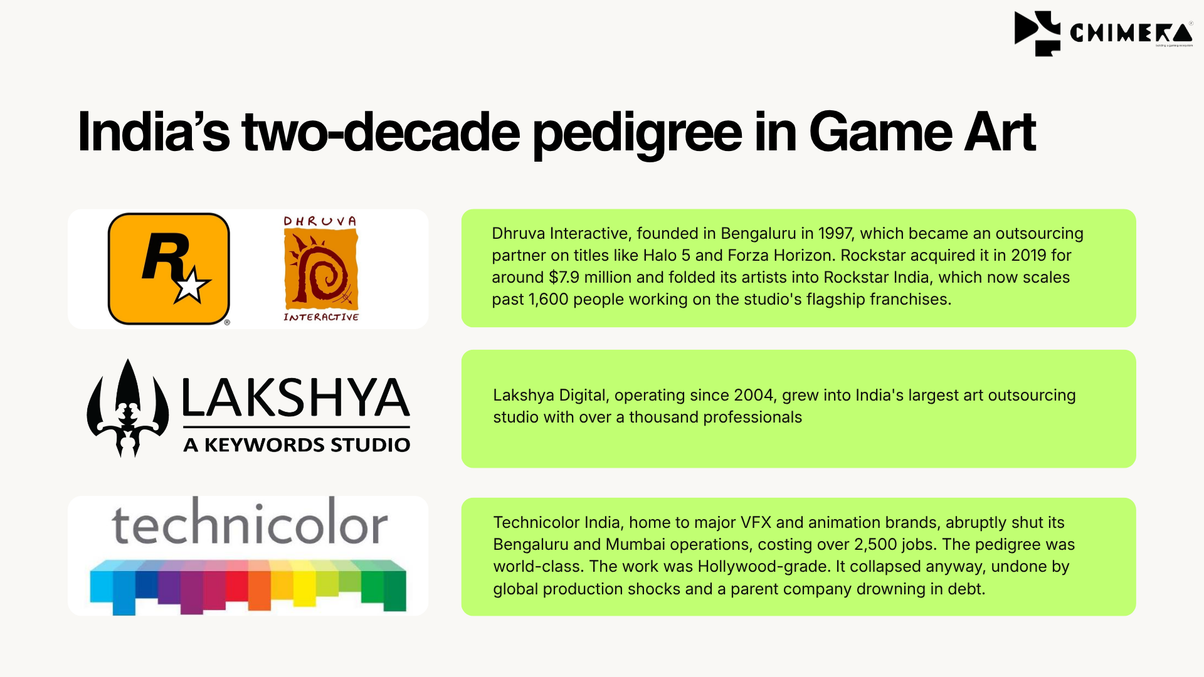
The foundation was Dhruva Interactive, founded in Bengaluru in 1997, which became an outsourcing partner on titles like Halo 5 and Forza Horizon. Rockstar acquired it in 2019 for around $7.9 million and folded its artists into Rockstar India, which now scales past 1,600 people working on the studio's flagship franchises.
That node became an ecosystem. Lakshya Digital, operating since 2004, grew into India's largest art outsourcing studio with over a thousand professionals. Little Red Zombies in Hyderabad went the other way, specializing hyper-narrowly in the hardest part of the pipeline, realistic character outfits, heads, and hair simulation for AAA titles.
The most telling example is Juego Studios in Bengaluru, because it shows where the value is moving. Juego no longer just fulfills asset lists. It embeds into client sprint cycles and ties deliverables to specific KPIs, treating art as pipeline-compliant, LiveOps-ready output rather than pretty pictures. That is the shift from execution to co-development, and it is worth far more.
But India's story carries a warning, and it arrived in early 2026.
Technicolor India, home to major VFX and animation brands, abruptly shut its Bengaluru and Mumbai operations, costing over 2,500 jobs. The pedigree was world-class. The work was Hollywood-grade. It collapsed anyway, undone by global production shocks and a parent company drowning in debt.
The real takeaway is this - Talent does not protect you. A pure service provider, however skilled, is fragile to headwinds it cannot control. Durability comes from owning a defensible layer, not from renting out hands.
Chimera's Take
We read this moment as a sorting of two business models.
One sells hours. The other owns a bottleneck.
The studios selling hours, however talented, are structurally exposed. When client demand slows or projects are delayed, their growth becomes difficult to control. By contrast, studios that embed themselves deeper into production pipelines, tie their work to measurable outcomes, or own a difficult-to-replicate capability are building businesses that compound over time.
The same logic points straight at founder opportunity. The gold is not in another text-to-image model; that fight is over and the giants won. The gold is in the unglamorous friction nobody has solved. AI that understands the semantic logic of where to hide a UV seam. Agents that validate whether an AI-placed level is actually playable, with real cover and sightlines. Tools that let studios train models on their own copyrighted art without leaking it to public APIs, now that a 2025 copyright ruling has made human-edited AI work legally protectable.
These are small, deep, technical problems. They are exactly where durable companies get built.
For founders we back, the message is simple. Do not chase the generation layer. Own a step in the pipeline that is painful, specific, and currently human. That is where the moat is.
Stay Ahead of the Curve
The dream of the magic button made for good headlines and bad strategy.
The real transformation was quieter. Game art became an engineering discipline, modular, parallel, and built on shared standards, with AI as an accelerator gated by the hard realities of topology, UVs, and legal provenance.
For India, this is both an opening and a test. The talent is proven and the demand is relentless. But the next decade will reward the studios that climb from selling craft to owning systems.
The button was never the point. The pipeline was. And the companies that understand the difference are the ones that will still be standing when the hype settles.
This is part of how we think about interactive entertainment. Read our thesis, see the companies we back, or tell us what you're building.